
For businesses operating in the UAE, space requirements can change quickly. A construction company may need a temporary site office, a contractor may require accommodation or meeting space, while an industrial business may need additional offices, storage areas or security rooms without committing to a permanent building.
This is where a portacabin can be a practical solution. But choosing one is not simply a matter of selecting the cheapest available unit. Size, intended use, construction quality, insulation, electrical systems, fire safety, transportation, installation and local approval requirements can all affect whether a portacabin actually works for your business.
Official regulations also make it clear that temporary and portable buildings still need to meet appropriate safety and regulatory requirements. For example, Abu Dhabi’s 2026 requirements for portable buildings address safe access and egress, concrete bases, fire detection and firefighting equipment, spacing between units, electrical safety and safe lifting.
So, how do you choose the right portacabin in the UAE? The answer starts with understanding what the building needs to do.
Start With the Purpose of the Portacabin
The first question should not be, “How much does a portacabin cost?” It should be, “What will we use it for?”
A portacabin used as a site office has very different requirements from one intended for worker accommodation, a security room, a meeting room or a storage facility.
For example, a construction company may need separate spaces for project management, engineering staff and site meetings. A warehouse might require a compact security cabin close to the entrance. An industrial project could need several connected cabins to create offices, welfare facilities or administrative areas.
Defining the purpose first makes it easier to determine the appropriate size, internal layout, electrical requirements, air-conditioning capacity and level of finishing.
Choose the Right Size and Layout
Available space is often one of the biggest considerations when selecting a portacabin.
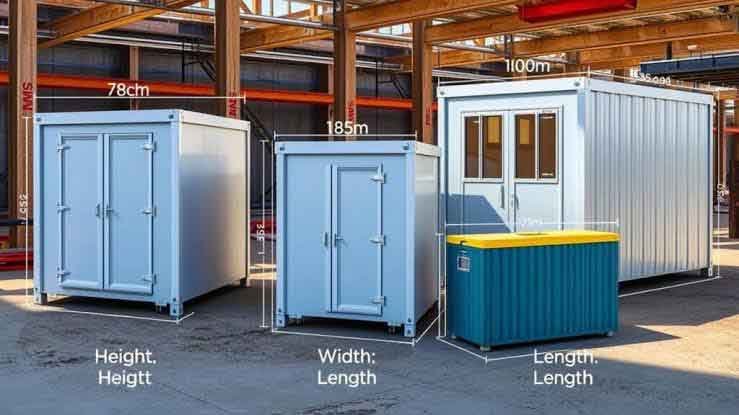
A compact unit may be enough for a security post or single-person office, while a larger business operation may need multiple units connected together. Modular configurations can also make it possible to create separate offices, meeting rooms, reception areas, kitchens and welfare facilities.
Before buying, measure the available site rather than relying only on the cabin’s internal dimensions. You need to account for access roads, vehicle movement, entrances, walkways, utility connections and maintenance access.
This is particularly important when several cabins are installed together. Abu Dhabi’s current temporary-structure requirements, for example, call for appropriate spacing between portable buildings and maintained pedestrian access between multiple units.
Consider UAE Climate Conditions
A portacabin that performs well in a mild climate may not provide the same level of comfort in the UAE.
High temperatures and intense solar exposure mean that insulation and cooling should be treated as important design considerations rather than optional extras. Walls, ceilings and floors should provide suitable thermal insulation, while doors and windows should be properly sealed.
Air conditioning is also essential for most occupied portacabins in the UAE. The correct AC capacity depends on factors such as room size, insulation, occupancy, equipment and exposure to outdoor heat.
For a site office containing computers and several employees, for example, simply installing an AC unit without considering heat gain can result in uncomfortable working conditions and higher operating costs.
A good portacabin supplier should therefore be able to explain the insulation specification, wall and roof construction and recommended cooling arrangement instead of offering only a basic cabin price.
Look Carefully at Construction Quality
Two portacabins can look almost identical from the outside while having very different construction quality.
Pay attention to the structural frame, floor construction, wall panels, roof system, doors, windows and protective coatings. Steel construction is commonly used for portable buildings because it provides a strong structural framework and is suitable for repeated handling and transportation.
Dubai Municipality’s technical specification for prefabricated portacabin-type buildings provides a useful example of how detailed specifications can become. Its 2024 specification for a guardroom type unit includes structural requirements, foundations, electrical and mechanical works, sanitary connections, air conditioning and firefighting works. It also specifies a minimum structural design life of 15 years for the complete prefabricated unit covered by that specification.
That does not mean every portacabin sold in the UAE has a 15-year design life. Instead, it demonstrates why buyers should ask for an actual technical specification rather than assuming that every prefabricated cabin is built to the same standard.
New or Used Portacabin?
Your budget and intended period of use will influence whether you should buy a new or used portacabin.
A new unit allows you to specify the layout, insulation, electrical system, doors, windows, flooring, sanitary facilities and other features from the beginning. It can be particularly useful when the cabin is expected to remain in service for many years.
A used portacabin can make financial sense when the requirement is temporary or the budget is limited. However, the purchase price should not be the only consideration.
Inspect the structural frame, roof, flooring, wall panels, doors and windows before purchasing. Check for corrosion, water damage, damaged insulation, electrical modifications and signs of previous repairs. Also ask about the unit’s history and whether it has been repeatedly transported between sites.
A lower purchase price is not necessarily a lower overall cost if significant repairs or modifications are required after delivery.
Don’t Ignore Fire and Electrical Safety
Fire safety is one of the most important areas to consider when choosing a portacabin.
In Abu Dhabi, current requirements state that portable buildings must comply with appropriate fire and electrical safety regulations. Where multiple portable buildings are used, an emergency plan and integrated fire alarm system are required, while fire detection and firefighting equipment must be provided according to the applicable UAE Fire and Life Safety Code and occupational safety requirements.
Electrical installations also need attention. The Abu Dhabi requirements state that electrical installations for portable buildings must be completed by a competent electrician, with testing of distribution boards, cables, sockets and fixed electrical installations every six months.
For businesses operating in Dubai, fire-safety compliance is also part of the wider regulatory framework. Dubai legislation places obligations on establishments and building owners regarding preventive safety requirements and maintenance of fire-prevention systems.
The exact requirements depend on the emirate, location, use and project. Therefore, buyers should confirm applicable requirements with the relevant authority before placing a cabin on site.
Check Whether Approvals or Permits Are Required
One common mistake is assuming that because a portacabin is “temporary,” no approval is necessary.
That assumption can create problems.
Dubai’s regulatory framework specifically recognizes temporary construction works, including temporary site offices and similar structures. Dubai Development Authority also provides a Temporary Construction Permit service for temporary construction work, with requirements that can include stamped design drawings, relevant authority NOCs, soil reports, structural calculations and master-developer approval where applicable.
The UAE Government also notes that building-related permits and completion processes are handled by the relevant authorities in each emirate.
Consequently, businesses should determine the approval requirements for their particular site before delivery. A supplier may assist with documentation, but the responsibility for ensuring that the installation is permitted should not simply be assumed away.
Think About Transportation and Installation
Buying the cabin is only one part of the project.
The unit needs to reach the site safely, be positioned correctly and connected to the necessary utilities. Access for the delivery vehicle or crane should therefore be considered before ordering.
Lifting is another important issue. Abu Dhabi’s portable-building requirements state that lifting points must be certified following inspection and testing by an approved third-party engineer, and manufacturers’ lifting recommendations must be followed.
This highlights why buyers should ask suppliers about transportation dimensions, lifting points, unloading arrangements and installation requirements in advance.
A cabin that fits inside the planned footprint may still be difficult to deliver if the site has restricted access.
Decide Which Features Your Business Actually Needs
Portacabins can be configured for different commercial requirements. Depending on their purpose, businesses may need features such as:
Office partitions can create separate workspaces and meeting rooms. Air conditioning is essential for occupied spaces in the UAE climate. Electrical sockets, lighting and distribution boards should match the expected equipment load. Windows can improve daylight and ventilation where appropriate. Toilets, washrooms and small kitchen areas may be required for staff facilities. Data and communication provisions can also be important for offices and control rooms.
The key is to avoid paying for features that your business does not need while also avoiding a basic specification that will require expensive modifications later.
Consider Portability and Future Expansion
One of the biggest advantages of a portacabin is that it can support changing business requirements.
A contractor may initially require four office cabins for a construction project and later relocate them to another site. An industrial company may begin with one administrative unit and add more space as operations expand.
If future relocation is likely, discuss how the cabin will be transported and whether its design is suitable for repeated movement. If expansion is likely, consider whether additional units can be installed alongside the original cabin without creating access, fire-safety or utility problems.
This approach can make the initial investment more useful over the longer term.
Compare Suppliers, Not Just Prices
When comparing portacabin suppliers in the UAE, avoid comparing quotations based only on the headline price.
One supplier’s price may include transportation, installation, electrical work, air conditioning and flooring, while another quotation may cover only the basic structure.
Ask each supplier to provide a clear specification covering the structural frame, wall and roof panels, insulation, flooring, doors and windows, electrical installation, air conditioning, sanitary facilities, transportation, crane or lifting requirements and installation.
You should also ask what documentation is provided with the unit and whether the supplier can support the approval process where required.
A transparent quotation makes it much easier to compare like-for-like options.
What to Inspect Before Buying a Used Portacabin
If you are considering a used unit, inspect it in person whenever possible.
Look for corrosion around the structural frame and base. Check the roof and ceiling for evidence of water leakage. Examine the flooring for soft areas or damage. Open and close doors and windows to check their condition. Inspect electrical panels and wiring for unsafe modifications. Check air-conditioning units separately rather than assuming they are operational.
It is also worth checking whether the cabin has been modified from its original design. Unapproved alterations can affect structural integrity, electrical safety or compliance.
For accommodation or office use, inspect the interior condition as carefully as the external structure because refurbishment costs can quickly change the economics of a used unit.
Build Your Decision Around Total Cost
The cheapest portacabin is not always the most economical choice.
Your actual cost can include the purchase price, transportation, crane or unloading, foundation or base preparation, electrical connections, plumbing, air conditioning, internal modifications, permits, maintenance and eventual relocation.
For example, a low-cost cabin requiring extensive refurbishment may become more expensive than a better-maintained unit with a higher initial price.
For this reason, businesses should compare the total cost of ownership, not simply the advertised selling price.
A Practical Way to Choose
A straightforward selection process can prevent many problems.
First, define the cabin’s purpose and expected number of occupants. Next, determine the available site area and access conditions. Then establish the required room layout, insulation, cooling, electrical and sanitary specifications.
After that, determine the applicable approval and safety requirements for the emirate and site. Compare suppliers using the same technical specification, inspect used units before purchase and obtain a written quotation covering delivery and installation.
Finally, consider whether the cabin will remain at one location or need to be relocated in the future.
This process takes more time at the beginning, but it reduces the risk of buying a cabin that is unsuitable for the intended application.
Final Thoughts
Choosing the right portacabin in the UAE is ultimately a balance between purpose, quality, safety, comfort, compliance and cost.
For a small security post, a compact standard unit may be enough. A construction company may need several connected offices with air conditioning and welfare facilities. An industrial business may require a more robust specification designed for long-term use. Meanwhile, a company with a short-term project may find a well-maintained used portacabin more economical than a new custom-built unit.
The most important step is to choose based on your actual business requirements rather than selecting a cabin solely because it has the lowest price.
Before installation, also verify the requirements of the relevant emirate and project authority. Dubai, Abu Dhabi and the other emirates can have different permitting, planning, occupational safety and fire-safety requirements. Official guidance confirms that these requirements are an important part of using temporary and portable buildings safely and legally.
A properly selected portacabin can provide a practical, flexible business space without the time and commitment associated with conventional construction. The key is making the decision from the inside out: start with what your business needs, then select the portacabin that can deliver it.