
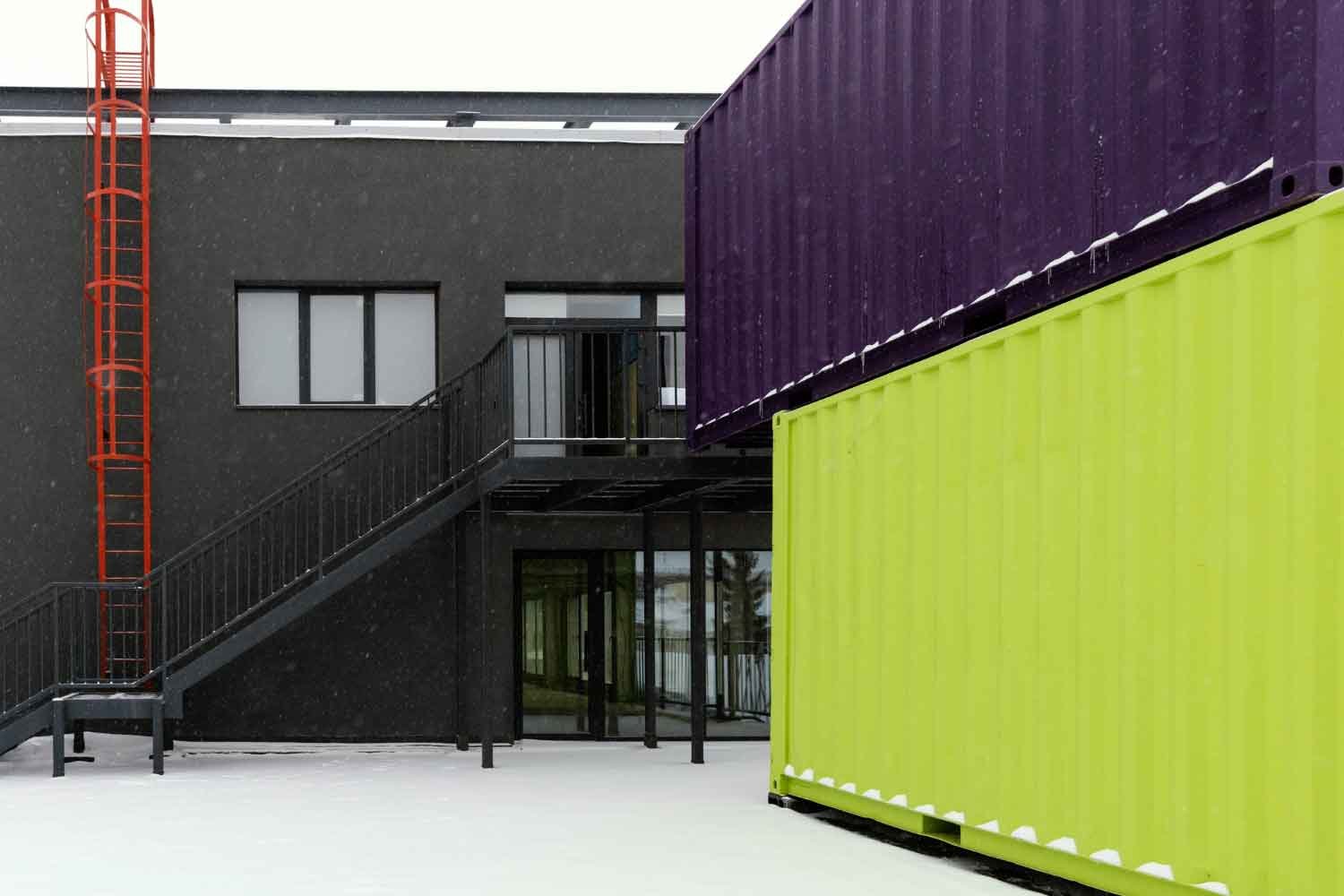
Buying a portacabin for the first time in Dubai may appear straightforward: choose a unit, agree on a price, and arrange delivery. In practice, there are several factors that can affect whether a prefabricated cabin is suitable for your site, intended use, and regulatory requirements.
Portacabins are commonly considered for site offices, security rooms, accommodation, storage, welfare facilities, classrooms, and other temporary or semi-permanent applications. However, buyers should not assume that a portable structure is automatically exempt from Dubai’s construction requirements. Dubai regulations define temporary construction works broadly and require relevant permits where construction works temporarily or permanently change the features of land or property.
For a first-time buyer, the safest approach is to treat the purchase as both an equipment decision and a site-planning decision.
1. Start With the Purpose of the Portacabin
Before contacting suppliers, determine exactly how the cabin will be used.
A basic site office has very different requirements from a worker accommodation unit, security cabin, retail space, classroom, toilet block, or storage cabin.
Ask yourself:
How many people will use the unit?
Will people work inside it for several hours a day?
Will it need air conditioning?
Is plumbing required?
Will it contain electrical equipment?
Does it need toilets or washing facilities?
Will it be used for storage?
How long will it remain at the site?
Will it be installed on a construction site, industrial plot, commercial property, or another location?
Dubai’s land-use regulations specifically recognise certain temporary uses, including temporary offices and security rooms at construction projects, subject to the applicable requirements.
Defining the intended use first prevents you from buying a cabin that later needs expensive modifications.
2. Decide Whether to Buy New or Used
One of the first financial decisions is whether you need a new portacabin or whether a used unit can meet your requirements.
New Portacabin
A new unit generally gives you greater control over:
Layout
Insulation
Doors and windows
Electrical installation
Flooring
Air conditioning
Plumbing
Internal finishes
It may therefore be appropriate when the cabin is expected to remain in use for a long period or needs to meet a specific layout.
Used Portacabin
A used cabin can make sense when budget is a major consideration or when the unit is required for a relatively straightforward application.
However, the purchase price should not be the only consideration. Inspect the cabin carefully for corrosion, roof leaks, damaged panels, flooring problems, poor insulation, electrical defects, damaged doors and windows, and evidence of previous repairs.
A cheap cabin requiring extensive refurbishment may ultimately cost more than a better-maintained unit.
3. Check the Cabin’s Construction Quality
Don’t judge a portacabin only by its external appearance.
Ask the supplier for information about:
Structural frame
Wall and roof panels
Insulation material and thickness
Flooring construction
Roof condition
Door and window specifications
Electrical system
Air-conditioning provisions
Plumbing, where applicable
Fire-safety provisions
Previous use, for used cabins
This is particularly important in Dubai because the cabin will need to cope with a hot and demanding outdoor environment for much of the year.
Good insulation can also make a practical difference to indoor comfort and the workload placed on the air-conditioning system.
4. Choose the Right Size and Layout
Portacabins are available in different dimensions and configurations. The right size depends on the number of occupants and the way the space will be used.
For example, a small security cabin may only require a compact room, while a project office may need multiple rooms, a reception area, meeting space, storage, and welfare facilities.
Think beyond today’s requirement. If a project team is expected to grow, buying the smallest possible cabin may create another expense later.
At the same time, buying a significantly larger unit than necessary increases transportation, installation, cooling, and site-space requirements.
5. Consider Dubai’s Climate
Dubai’s high summer temperatures make thermal performance an important part of the purchasing decision.
Look closely at the cabin’s insulation, roof construction, windows, doors, ventilation, and air-conditioning arrangement.
A poorly insulated cabin can become uncomfortable quickly when exposed to direct sunlight, while an appropriately insulated unit can make temperature control easier.
For office or accommodation applications, also consider:
Split AC or packaged AC requirements
Window shading
Insulated doors
Roof insulation
Ventilation
Electrical capacity for cooling equipment
The cabin should be assessed as a complete system rather than simply as a steel or prefabricated box.
6. Check Electrical and Plumbing Requirements
A portacabin may need considerably more infrastructure than a buyer initially expects.
A site office could require lighting, sockets, computers, printers, air conditioning, water dispensers, and other equipment. Accommodation units may additionally require water heaters, kitchen equipment, washing machines, and bathroom facilities.
If plumbing is required, establish how fresh water, wastewater, drainage, and other connections will be handled.
Ask the supplier to clearly identify what is included in the purchase price and what will have to be arranged separately.
7. Understand Dubai’s Permit Requirements
This is one of the most important steps for a first-time buyer.
Do not assume that purchasing a prefabricated cabin means you can place it anywhere without approval. Dubai Municipality states that its building-permit procedures cover different types of construction, including industrial buildings. Dubai’s construction regulations also require relevant permits for works that temporarily or permanently change the features of land or property.
Dubai’s Building Code applies to building designs for which permits are issued throughout the emirate, including special development zones and free zones.
The exact approvals can depend on:
Location
Land use
Intended purpose
Size of the cabin
Whether foundations or other site works are required
Utility connections
Fire-safety requirements
Whether the site is in a free zone or another regulated area
Before buying, confirm with the relevant authority, landlord, developer, or site consultant what approvals apply to your particular installation.
8. Don’t Overlook Fire and Life Safety
Fire safety should be considered before the cabin is delivered, particularly when it will be used as an office, accommodation, commercial space, or industrial facility.
Dubai Civil Defence maintains fire and life-safety requirements covering buildings and industrial facilities, and certain building components and fire-safety products may require appropriate evaluation, certification, or registration.
Depending on the application, the project may require fire alarms, emergency lighting, extinguishing equipment, fire-resistant materials, or other systems.
A supplier should be able to explain the fire-safety specifications of the proposed cabin and provide relevant documentation where required.
9. Inspect a Used Portacabin Before Paying
If you’re buying a used portacabin, a physical inspection is one of the most valuable steps you can take.
Check the following:
Exterior
Look for rust, dents, damaged panels, corrosion around joints, roof damage, and signs of water penetration.
Interior
Inspect walls, ceilings, flooring, doors, windows, locks, and internal finishes.
Roof
Look for patch repairs, standing-water marks, damaged waterproofing, and signs of previous leaks.
Electrical System
Check the distribution board, sockets, switches, lighting, wiring condition, and air-conditioning connections.
Plumbing
If the cabin has bathrooms or a kitchen, test taps, drainage, toilets, water heaters, and visible pipework.
Air Conditioning
Check whether the AC units operate correctly and whether they are appropriately sized for the space.
Take photographs and record defects before agreeing to the final purchase price.
10. Ask for Documentation
A professional supplier should be able to provide clear information about what you are purchasing.
Depending on the cabin and its intended use, useful documentation may include:
Dimensions and layout drawings
Technical specifications
Electrical details
Insulation specifications
Fire-related documentation
Equipment manuals
Previous maintenance records for used units
Delivery and installation details
Warranty information
Documentation becomes particularly important if the cabin needs to go through an approval process.
11. Calculate the Total Purchase Cost
The quoted price of a portacabin is not necessarily the final cost.
Your budget may also need to cover:
Transportation
Crane or lifting equipment
Site preparation
Foundations or supports
Installation
Electrical connections
Plumbing connections
Air conditioning
Furniture
Refurbishment
Permits and approvals
Future relocation
For example, a used cabin with a low purchase price may require refurbishment and additional installation work, while a more expensive ready-to-use unit could have fewer additional costs.
Ask suppliers for an itemised quotation rather than comparing only the headline price.
12. Plan Delivery and Site Access
A portacabin must physically reach the intended location.
Before purchasing, check:
Road access
Gate width and height
Turning space
Overhead clearance
Ground conditions
Crane positioning
Delivery restrictions
Final placement area
The cabin’s dimensions and weight can influence the type of transport and lifting equipment required.
If the unit needs to be positioned inside a restricted site, discuss access with the supplier before finalising the purchase.
13. Compare Suppliers on More Than Price
A reliable supplier should be able to answer technical questions rather than simply quote a price.
Compare suppliers based on:
Cabin condition
Construction quality
Specifications
Customisation options
Documentation
Delivery arrangements
Installation support
Warranty
After-sales service
Experience with Dubai projects
Be cautious when a quotation is unusually low but provides little information about what is included.
14. Think About Future Relocation
One of the major advantages of prefabricated cabins is flexibility. A business may need to move the unit when a construction project ends, a site changes, or operations expand.
If relocation is likely, discuss lifting points, transport requirements, dismantling, reconnection of services, and future installation with the supplier from the beginning.
Also remember that moving a cabin to another location can trigger a new set of site-specific approvals.
15. Use a Simple Pre-Purchase Checklist
Before making the final payment, confirm:
The cabin is suitable for its intended purpose.
Dimensions and layout are correct.
Structural condition has been inspected.
Roof and walls are free from significant defects.
Insulation is appropriate for the intended use.
Electrical requirements have been checked.
Plumbing requirements have been identified.
Air conditioning is suitable.
Fire-safety requirements have been considered.
Required approvals have been discussed.
Delivery access has been confirmed.
Installation requirements are understood.
The quotation includes all agreed costs.
Warranty and after-sales terms are documented.
Conclusion
Buying a portacabin in Dubai for the first time is easier when the decision is approached systematically. Start with the intended use, select the appropriate size and specification, inspect the construction quality, understand installation requirements, and investigate permits before committing to the purchase.
Most importantly, don’t treat a portacabin as simply a low-cost alternative to a conventional building. Its suitability depends on the site, purpose, construction quality, utilities, fire-safety requirements, and applicable Dubai regulations.
A well-planned purchase can provide a practical and adaptable workspace or facility, while careful inspection and proper regulatory checks can help prevent unexpected costs after delivery.