
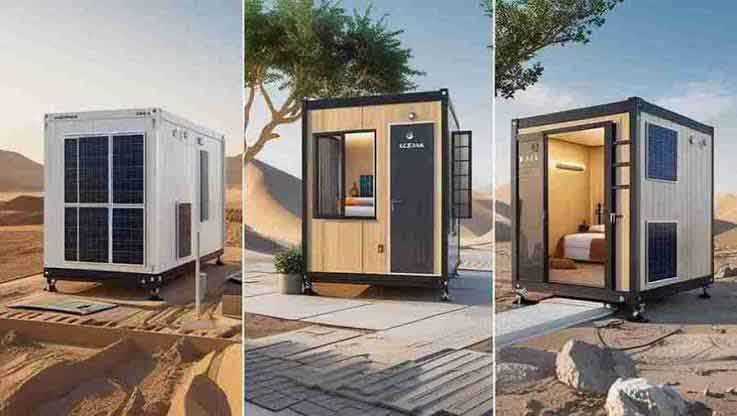
Choosing a portacabin is not simply a matter of selecting the largest unit that fits your budget or the smallest one available for quick installation. In the UAE, portacabins are used for construction site offices, accommodation, security cabins, meeting rooms, clinics, classrooms, canteens, storage facilities and temporary commercial spaces. Each application requires a different amount of floor space and a different internal arrangement.
There is also no single portacabin size that works for every project. Current UAE suppliers offer a wide range of dimensions, from compact security cabins to larger modular units that can be connected or configured as multi-storey facilities.
The right choice depends on how many people will use the cabin, what activities will take place inside, what furniture or equipment is required, how much space is available on site and whether the facility may need to expand later.
Start With the Purpose of the Portacabin
The first question should be: What will the portacabin be used for?
A small security cabin may only need enough room for a guard, desk, chair, electrical equipment and clear visibility toward an entrance. A site office for several engineers and supervisors requires considerably more space, particularly if it needs storage or a meeting area.
Accommodation requires another approach because sleeping arrangements, sanitary facilities, circulation and welfare requirements need to be considered. Similarly, a clinic may need separate reception, consultation and treatment areas rather than one large open room.
UAE suppliers currently market compact cabins for security and utility purposes as well as larger units for offices, accommodation, dining facilities and other applications.
Defining the purpose first makes it easier to determine the appropriate size.
Understand Common Portacabin Sizes in the UAE
Portacabin dimensions vary between manufacturers, so advertised sizes should be treated as market examples rather than universal standards.
Commonly marketed configurations include approximately 2 m × 2 m compact cabins, 3 m × 4 m units, 3 m × 6 m cabins, 3 m × 9 m units and 3 m × 12 m cabins. Larger or custom configurations are also available.
Some suppliers use container-based dimensions, while others manufacture wider or longer prefabricated cabins. For example, one UAE supplier currently offers a 12 m × 3.6 m standard cabin, while other suppliers commonly market 3 m × 6 m and 3 m × 12 m formats.
This difference is important when comparing quotations. Two cabins described as being the same nominal size may have different usable internal areas because of wall thickness, insulation, partitions and installed services.
Always ask the supplier for the external dimensions and finished internal dimensions before placing an order.
Choosing a Small Portacabin for Security and Guard Duties
Small portacabins can be suitable when the primary requirement is security or access control.
Typical applications include gatehouses, security checkpoints, parking control points and reception booths.
A compact cabin can work well when the occupant only needs a workstation, chair, electrical points and visibility toward the entrance. However, choosing the smallest possible unit may become uncomfortable if security personnel work long shifts.
Consider space for:
- A desk or security counter
- Seating
- CCTV monitors and other equipment
- Storage
- Air conditioning
- Electrical equipment
- Comfortable movement around the workstation
A slightly larger cabin may therefore provide better working conditions without requiring a major increase in the overall footprint.
Is a 3 m × 6 m Portacabin Right for Your Business?
The 3 m × 6 m configuration is one of the commonly marketed options in the UAE for site offices and other general-purpose applications. Suppliers also list similar approximately 20-foot configurations for offices and project facilities.
This size can be useful for:
- Small project offices
- Supervisor offices
- Meeting rooms
- Reception areas
- First-aid rooms
- Staff facilities
- Small administrative offices
The actual suitability depends on the layout. A 3 m × 6 m cabin with several partitions will provide a very different working environment from an open-plan cabin.
For example, dividing the space into an office and small meeting room may reduce the usable area of each room. If several employees need to work simultaneously, an open arrangement may make better use of the available floor area.
When a Larger Portacabin Makes More Sense
A larger cabin becomes practical when the facility needs multiple workstations, meeting space, storage or additional rooms.
The 3 m × 9 m and 3 m × 12 m formats are commonly marketed for larger offices, accommodation, dining areas and similar applications in the UAE.
A 3 m × 12 m unit, for example, provides significantly more floor space than a compact site office and can potentially accommodate different internal configurations.
Depending on the intended use, it could be arranged as an open office, accommodation unit, dining facility or a combination of rooms.
However, bigger is not automatically better. A large cabin that is only partially occupied can waste valuable site space and increase transportation, installation and operating requirements.
The goal is to select enough space for the intended use while leaving sensible room for future requirements.
Think About the Number of People
Occupancy is one of the most important factors when choosing a portacabin size.
For an office, count not only permanent employees but also supervisors, visitors and people who may use the meeting space. Consider whether employees need individual desks or whether a shared workstation arrangement is acceptable.
For accommodation, the calculation is more complicated because sleeping arrangements and welfare facilities must be considered alongside the available floor area.
Do not assume that a particular cabin size automatically permits a specific number of occupants. Requirements can depend on the use of the facility and applicable authority requirements.
For projects in Dubai, building requirements should be checked against the applicable Dubai Building Code and project approvals. Dubai Municipality states that the Dubai Building Code establishes minimum requirements relating to health, safety, welfare and building design.
Plan the Layout Before Ordering the Cabin
Size and layout should be considered together.
A cabin may have enough total floor area but still feel too small if partitions, doors, furniture and equipment are poorly arranged.
Before ordering, prepare a simple layout showing:
- Desks and workstations
- Meeting tables
- Beds where applicable
- Storage cabinets
- Internal partitions
- Doors and door swings
- Windows
- Washrooms
- Kitchen or pantry areas
- Electrical points
- Air-conditioning equipment
Current UAE portacabin guidance recommends requesting a dimensioned general-arrangement drawing rather than relying only on advertised external dimensions. This helps buyers understand the actual usable room area and how services and partitions affect the space.
A layout can also identify problems before fabrication or delivery. Moving a partition on a drawing is much easier than changing the cabin after manufacturing.
Consider Furniture and Equipment
Furniture can have a major effect on the amount of space you actually need.
A site office with four desks may fit comfortably in one configuration but become crowded when you add a meeting table, printer, filing cabinets and storage.
Industrial or technical facilities may also require equipment that needs dedicated floor space.
Measure actual furniture and equipment wherever possible. Do not rely entirely on generic symbols on a floor plan.
The cabin should allow people to move around furniture without blocking doors, windows, electrical equipment or emergency routes.
Do Not Forget the Space Outside
The available site footprint is larger than the cabin itself.
Before selecting a size, consider where the cabin will be placed and what access is required around it. Delivery vehicles need suitable access, while lifting and positioning may require additional working space.
External considerations can include:
- Access for delivery vehicles
- Crane or lifting requirements
- Entrance steps or ramps
- Drainage
- Utility connections
- Air-conditioning outdoor units
- Walkways
- Emergency access
- Required separation from other structures
A cabin that fits neatly into an empty area on a site drawing may not be practical if there is insufficient access for delivery or installation.
Current UAE portacabin guidance specifically recommends considering transport, lifting access, external equipment and required clearances when planning the installation.
Should You Choose One Large Cabin or Multiple Units?
For larger projects, you do not necessarily need one enormous cabin.
Multiple modular units can be connected to create larger facilities. Suppliers in the UAE market offer modular configurations that can be joined or stacked according to project requirements.
For example, separate units could be used for administration, meetings, accommodation, welfare facilities and storage.
This approach can make future expansion easier. If the workforce grows or project requirements change, additional modules may be added instead of replacing the entire facility.
However, connected modules require proper planning for joints, services, access and structural requirements. The final arrangement should therefore be developed with the supplier before ordering.
Consider Single-Storey and Multi-Storey Options
When land is limited, building vertically can be an alternative to continuously increasing the footprint.
Two-storey modular arrangements can provide additional floor area while keeping more ground space available for vehicles, equipment and site operations. UAE suppliers currently market both linked and stacked configurations for projects requiring greater capacity.
A multi-storey solution should not be selected solely to save ground space. Stair access, structural design, fire safety, utilities and applicable approval requirements must be considered as part of the complete design.
UAE Climate Should Influence Your Choice
Size is only one part of selecting a suitable portacabin for the UAE.
The cabin also needs to provide an appropriate environment for the people using it. Insulation, air conditioning, ventilation, windows, electrical capacity and internal finishes can all affect comfort and operating performance.
Current UAE suppliers offer cabins with insulated walls and roofs and air-conditioning provisions designed for site and commercial applications.
A larger cabin also means a larger space to cool. Therefore, the most practical size is not simply the one that provides maximum floor area. It should provide enough usable space without creating unnecessary cooling and operating requirements.
Check Regulations and Approvals Before Ordering
A portacabin may be temporary or prefabricated, but that does not mean every project has the same approval requirements.
Requirements can vary depending on the emirate, location, application and type of facility.
Dubai Municipality’s Dubai Building Code sets minimum requirements relating to building safety, welfare and design.
Projects involving accommodation, construction sites, industrial facilities, schools, clinics or other specialist uses may also have additional requirements.
For this reason, buyers should confirm applicable authority requirements with the supplier and project consultant before fabrication.
Do not select a size first and investigate compliance afterward.
How to Choose the Right Portacabin Size
A practical selection process can be broken down into five stages.
First, define the purpose of the cabin. Decide whether it will be an office, accommodation unit, security cabin, clinic, classroom, storage facility or another type of space.
Second, calculate the number of people who will use it and identify the activities they will perform.
Third, list the furniture, equipment, storage and services that must fit inside.
Fourth, create a basic layout and check circulation, doors, windows and room divisions.
Finally, check the available site area, delivery access, installation requirements and applicable approvals.
This process is more reliable than selecting a cabin based only on its external dimensions.
Common Mistakes to Avoid
One of the most common mistakes is choosing a cabin based solely on price.
A cheaper, smaller cabin may require additional units later if the business expands. Another mistake is relying on external dimensions without checking the finished internal area.
Poor layout planning can also make a reasonably sized cabin feel cramped.
Buyers should also avoid forgetting external requirements such as delivery access, AC units, steps, utilities and emergency routes.
Another important mistake is assuming that a standard cabin is automatically suitable for every application. Standard models can provide faster procurement, but custom layouts may be more appropriate when the project has specific operational requirements. UAE suppliers currently offer both standard and drawing-based custom configurations.
Choosing a Portacabin Supplier in the UAE
Once you know the required size and layout, compare suppliers based on more than the quoted cabin price.
Ask for the complete specification, including external and internal dimensions, insulation, flooring, doors, windows, electrical installation, air conditioning provisions and sanitary facilities where applicable.
You should also clarify whether delivery, positioning, installation and commissioning are included.
Most importantly, ask for a layout drawing before confirming the order. A professional supplier should be able to explain how the proposed cabin will accommodate your people, furniture, equipment and services.
Final Thoughts
Choosing the right portacabin size in the UAE requires more than comparing length and width. The best solution is the one that provides enough usable space for the people and activities involved while fitting the site, budget, transport requirements and applicable regulations.
A compact cabin can be ideal for security or a small office, while larger 3 m × 9 m or 3 m × 12 m configurations can provide more flexibility for offices, accommodation and shared facilities. For larger projects, linked or multi-storey modular arrangements can create additional space without requiring one oversized unit.
Before buying a portacabin, prepare the layout, measure furniture and equipment, check site access and confirm the relevant approval requirements. Taking these steps before ordering can help prevent costly changes and ensure that the cabin works properly from the day it is installed.