
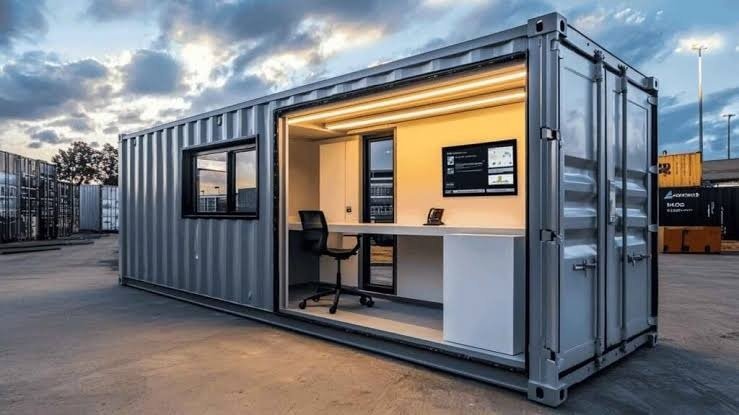
Buying a portacabin in the UAE can be a practical way to create additional office, accommodation, security, storage, welfare, or project space without constructing a conventional building from the ground up. Portacabins are factory-built or prefabricated units that can be transported to a site, installed relatively quickly, and, depending on their design, relocated when a project changes.
However, buying the right portacabin involves more than comparing photographs and prices. The intended use, dimensions, layout, construction materials, insulation, air conditioning, electrical system, fire safety, transportation, installation, site conditions, and applicable approvals all need to be considered.
This is particularly important in the UAE, where high temperatures and demanding outdoor conditions can affect the comfort and operating requirements of a cabin. A unit that appears inexpensive at the time of purchase may become less suitable if it has inadequate insulation, an unsuitable layout, poor ventilation, or requires unexpected modifications before it can be used.
This complete guide explains how to buy a portacabin in the UAE, what to check before purchasing, how to compare suppliers, and which questions to ask before placing an order.
What Is a Portacabin?
A portacabin is a prefabricated, transportable building unit manufactured away from its final site and then delivered for installation or placement. Depending on its design, it may be used as a site office, security room, accommodation facility, meeting room, storage area, welfare facility, kitchen, toilet block, reception, or other temporary or modular space.
UAE suppliers offer different configurations, sizes, construction systems, finishes, and levels of fit-out. Some units are supplied as basic shells, while others can arrive with insulation, electrical wiring, lighting, flooring, air conditioning, plumbing, partitions, doors, windows, and sanitary facilities already installed.
The term “portacabin” therefore does not describe one standard product. Two cabins with similar external dimensions can have substantially different specifications and intended uses.
That is why the first step in buying a portacabin in the UAE should be defining exactly what the unit needs to do.
Step 1: Decide Why You Need the Portacabin
Before contacting suppliers, identify the purpose of the cabin.
A construction company may need a site office for project managers, engineers, consultants, or supervisors. An industrial facility may require additional office or welfare space. A project may need accommodation, dining facilities, changing rooms, security cabins, storage, or temporary administrative areas.
The intended application affects almost every other buying decision.
For example, an office may require desks, lighting, electrical sockets, data connections, air conditioning, windows, partitions, and meeting space. Accommodation may require sleeping areas, ventilation, sanitary facilities, suitable access, fire-safety provisions, and an appropriate occupancy arrangement.
A security cabin may have very different space requirements from a multi-room accommodation unit.
Some UAE suppliers specifically manufacture cabins for applications including site offices, accommodation, stores, kitchens, guard posts, toilets, ablution blocks, and welfare facilities.
Before requesting quotations, write down:
- Intended use
- Number of people using the cabin
- Required rooms or work areas
- Required furniture or equipment
- Required electrical equipment
- Air-conditioning requirements
- Plumbing or sanitary requirements
- Expected duration of use
- Whether the cabin may need to be moved later
- Project location
- Access conditions for delivery
This information gives suppliers enough detail to quote a suitable configuration instead of simply offering the cheapest standard unit.
Step 2: Choose Between New, Used, and Refurbished
One of the first decisions is whether to purchase a new portacabin or consider a used or refurbished unit.
A new cabin can be specified around your project requirements. This can be useful when you need a particular floor plan, insulation system, electrical configuration, sanitary arrangement, or interior finish.
A used cabin can potentially reduce the initial purchase cost, but its condition needs to be assessed carefully. Previous use can affect flooring, wall panels, roofing, doors, windows, electrical installations, plumbing, air-conditioning equipment, and structural components.
A refurbished cabin sits between these approaches. The unit may have been previously used but repaired, cleaned, repainted, upgraded, or otherwise prepared for another project.
There is no universal answer as to which option is appropriate. The right choice depends on your budget, intended period of use, required specification, condition of the available unit, and the cost of any repairs or modifications.
For a used portacabin, do not rely solely on photographs. A physical inspection or detailed inspection report can reveal problems that are not obvious from an online listing.
Step 3: Select the Correct Size and Layout
Size is one of the most important factors when buying a portacabin.
A cabin needs to provide enough usable space for its intended occupants and equipment while also fitting the available site. Published UAE supplier ranges show that cabins are available in different footprints, with examples including approximately 3 × 6 m, 3 × 7 m, 3 × 8 m, 3 × 9 m, 3 × 12 m, and other custom configurations. These are examples of products available in the market, not a universal UAE standard.
Do not choose a size simply because it appears to fit the site.
Consider the usable internal floor area, partitions, furniture, equipment, doors, windows, air-conditioning equipment, circulation space, and any bathroom or kitchen areas.
You should also consider how the cabin will be delivered.
A unit may fit comfortably within the proposed site but still create a delivery problem if there is insufficient access for the transport vehicle or lifting equipment. Before purchasing, check:
- Site entrance width
- Road access
- Overhead obstructions
- Ground conditions
- Available unloading area
- Position of the cabin
- Required lifting equipment
- Clearance around the unit
- Electrical and water connection points
- Drainage requirements
A supplier should be given the actual site information rather than only the desired cabin dimensions.
Step 4: Pay Attention to Insulation
Insulation is particularly important when buying a portacabin for use in the UAE.
A portable cabin can have a relatively compact enclosed space, so the quality of its walls, roof, floor, doors, windows, and seals can influence the internal thermal environment and the workload placed on the air-conditioning system.
UAE suppliers commonly offer insulated sandwich-panel construction using materials such as polyurethane, EPS, or rock wool, depending on the product and application.
When comparing cabins, ask the supplier for the actual construction specification rather than simply asking whether the cabin is “insulated.”
Find out:
- Wall panel type
- Insulation material
- Insulation thickness
- Roof construction
- Ceiling insulation
- Floor construction
- Door construction
- Window type
- Sealing around doors and windows
- Air-conditioning specification
Two cabins with identical external dimensions can therefore have different thermal performance because their panel systems and insulation specifications differ.
For a cabin that will be occupied for long periods, thermal performance deserves particular attention.
Step 5: Check the Structural Construction
A portacabin needs to be suitable for transportation, placement, and the conditions in which it will be used.
Ask the supplier for details about the frame, chassis, roof structure, floor structure, corrosion protection, wall panels, and lifting points.
For example, published UAE supplier specifications describe portable office cabins using steel frames or galvanised steel chassis and insulated sandwich-panel walls.
For a new unit, request the technical specification or drawing before placing the order.
For a used unit, inspect the structure carefully for:
- Corrosion
- Damaged frame members
- Distorted sections
- Water ingress
- Roof damage
- Floor deterioration
- Damaged lifting points
- Cracked or damaged panels
- Poor previous repairs
- Door and window alignment
A clean interior does not necessarily mean that the underlying structure is in good condition.
Step 6: Check the Roof and Waterproofing
The roof is another important part of the inspection.
Ask how the roof is constructed and protected against water ingress. Examine joints, roof penetrations, drainage arrangements, flashing, seals, and areas around air-conditioning equipment.
For a used cabin, look for evidence of previous leaks, including staining, damaged ceiling boards, swollen materials, mould-like growth, corrosion, or repaired sections.
A supplier should be able to explain how the roof is designed and what maintenance is expected.
If the cabin will remain outdoors for an extended period, roof condition should be treated as a major purchasing consideration rather than a cosmetic detail.
Step 7: Evaluate Doors and Windows
Doors and windows influence security, ventilation, natural light, thermal performance, and day-to-day usability.
Check whether the doors are appropriate for the intended application and whether windows provide sufficient daylight and ventilation where required.
For a used cabin, operate every door and window during inspection. Check hinges, locks, handles, frames, seals, glass, shutters, and alignment.
If the cabin will be air conditioned, poorly sealed doors and windows can also affect cooling performance.
The supplier should provide the door and window specification rather than relying on a general statement such as “fully finished.”
Step 8: Review the Electrical System
Never treat electrical installation as an afterthought.
A portacabin used as an office may require lighting, sockets, computers, printers, networking equipment, air conditioning, water heaters, kitchen appliances, or other electrical loads.
Ask the supplier to provide information about:
- Electrical distribution board
- Incoming electrical supply
- Circuit protection
- Lighting
- Number and position of sockets
- Air-conditioning circuits
- Emergency lighting where applicable
- Data or communication points
- Earthing arrangements
- Cable installation
- Total electrical load
The required electrical specification depends on the cabin’s design and intended use.
If you are buying a used unit, have the electrical installation checked by a suitably qualified professional before putting it into service, particularly if the previous installation history is unknown.
Step 9: Check Air Conditioning and Ventilation
Air conditioning is often essential for an occupied portacabin in the UAE.
Do not simply ask whether the cabin includes an AC unit. Ask what equipment is included and whether its capacity is appropriate for the cabin’s size, insulation, occupancy, equipment load, and site conditions.
Check:
- Number of AC units
- Cooling capacity
- Age and condition for used equipment
- Indoor and outdoor unit condition
- Electrical requirements
- Drainage
- Thermostat/control system
- Maintenance history
Ventilation is also important, particularly for accommodation, toilets, kitchens, and other spaces where natural ventilation may not be sufficient.
A cabin intended for long-term occupation should be assessed as a complete indoor environment rather than just a box with an air conditioner.
Step 10: Consider Plumbing and Sanitary Facilities
If the portacabin includes a bathroom, toilet, kitchen, shower, or other water-connected facility, check the complete plumbing arrangement.
Do not assume that a cabin with a bathroom can simply be placed anywhere without considering water supply and drainage.
Step 11: Check Fire Safety Requirements
Fire safety should be considered before buying, not after the cabin arrives at the site.
The applicable requirements can vary depending on the emirate, site, occupancy, building use, project type, and approving authority. Dubai’s official regulations recognize temporary buildings and temporary uses, while Dubai Municipality maintains procedures covering building permits and technical requirements.
There can also be specific requirements for particular locations.
For example, the Ports, Customs and Free Zone Corporation states requirements for temporary use of portacabins and containers within its jurisdiction, including documentation such as site plans, drainage drawings, fire-protection arrangements, and detailed cabin specifications. Its published requirements state that the construction material for the relevant temporary-use approval must have a minimum 30-minute fire rating.
This should not be interpreted as a universal requirement for every portacabin throughout the UAE. Instead, it demonstrates why buyers should confirm the requirements applicable to their specific site.
Ask the supplier for relevant information concerning:
- Fire-rated construction
- Fire-rated doors where required
- Fire detection
- Fire extinguishers
- Emergency exits
- Electrical safety
- Fire alarm provisions
- Relevant test reports or certificates
Where approval is required, have the specification reviewed against the applicable authority requirements before purchasing.
Step 12: Check Local Approval and Permit Requirements
Buying a cabin and obtaining permission to place or use it are not necessarily the same thing.
The requirements can depend on where the cabin will be located and what it will be used for.
Dubai’s regulations contain provisions for temporary uses, while the Dubai Development Authority also provides a Temporary Construction Permit process involving items such as consultant-stamped design drawings and, where applicable, NOCs, structural calculations, and other documents.
For projects in ports, free zones, industrial areas, or developments controlled by a particular authority, additional approval procedures may apply.
Before paying a deposit, confirm:
- Who owns or controls the land.
- Which authority regulates the site.
- Whether the proposed use is permitted.
- Whether a temporary building or construction permit is required.
- Whether an NOC is required.
- Whether fire-safety approval is required.
- Whether drawings or structural documents must be submitted.
- Whether there are restrictions on the duration of use.
The supplier can provide technical documents, but the buyer should confirm that the proposed installation is acceptable for the actual site.
Step 13: Compare Portacabin Specifications, Not Just Prices
One of the most common purchasing mistakes is comparing only the quoted price.
A quotation can look cheaper because it excludes items that another supplier has included.
A supplier may quote a basic shell, while another may quote a fully fitted office. Comparing the numbers without comparing the specifications can therefore lead to the wrong conclusion.
Step 14: Ask What Is Included in Delivery and Installation
A portacabin purchase may involve more than manufacturing the unit.
Depending on the supplier and project, the overall service can involve transportation, unloading, lifting, positioning, joining multiple units, connecting utilities, and completing site works.
Some UAE suppliers describe cabins as factory-finished units that are delivered and then positioned on site, while others offer more extensive installation or project-specific services. Ask for a written breakdown of:
- Manufacturing
- Transportation
- Unloading
- Crane or lifting equipment
- Positioning
- Foundations or supports
- Electrical connection
- Water connection
- Drainage connection
- Air-conditioning installation
- Internal fit-out
- External works
- Testing and commissioning
This helps prevent unexpected costs after the purchase order has been placed.
Step 15: Check the Foundation or Base Requirements
A portacabin still needs a suitable surface or support arrangement.
The exact foundation or support requirement depends on the unit, ground conditions, location, configuration, and project requirements.
For example, Dubai Municipality’s published specifications for a particular prefabricated portacabin application include foundation works as part of the complete installation requirements.
Therefore, do not assume that every cabin can simply be placed directly on bare ground.
Ask the supplier or project consultant what is required for the specific cabin and site.
Step 16: Inspect a Used Portacabin Before Buying
If you are buying a used portacabin, inspection becomes particularly important.
Start with the exterior. Examine the frame, corners, roof, panels, doors, windows, lifting points, and underside where accessible.
Then inspect the interior for water damage, damaged panels, flooring problems, electrical modifications, damaged fixtures, and signs of previous repairs.
Operate the doors, windows, electrical equipment, lights, air conditioners, plumbing fixtures, and other installed equipment.
Ask for maintenance records where available.
You should also determine:
- How old the cabin is
- Where it was previously used
- Whether it has been relocated multiple times
- Whether it has been modified
- Whether major components have been replaced
- Whether there is evidence of water leakage
- Whether electrical or plumbing work has been altered
- Whether the current layout matches the drawings
A low purchase price can become less attractive if substantial repairs are needed.
Step 17: Consider the UAE Climate
The UAE’s hot climate makes thermal performance an important consideration for occupied cabins.
Supplier specifications in the UAE market commonly emphasize insulated wall and roof systems, weather resistance, and air conditioning for portable cabins intended for local use.
When buying, consider the complete thermal system rather than one specification in isolation.
A cabin with insulated walls but poor roof insulation, weak door seals, unsuitable windows, or inadequate air conditioning may still be uncomfortable during periods of high outdoor temperature.
For long-term use, ask the supplier to explain how the cabin has been designed for the expected environmental conditions and what maintenance is required.
Step 18: Decide Whether You Need a Standard or Custom Cabin
Standard cabins can be useful when your requirements closely match an existing design.
A custom cabin may make more sense when you need a specific room arrangement, number of occupants, sanitary facilities, electrical load, internal finishes, or special equipment.
Customisation can include:
- Internal partitions
- Doors and windows
- Electrical points
- Lighting
- Air conditioning
- Flooring
- Ceiling finishes
- Kitchen areas
- Bathrooms
- Plumbing
- Furniture
- Branding or external finishes
Before approving a custom design, ask for drawings showing the proposed layout.
This allows you to identify problems before manufacturing begins.
Step 19: Check the Supplier’s Documentation
A professional supplier should be able to explain what you are buying.
Depending on the product and application, useful documents can include technical drawings, specifications, material information, electrical details, structural information, fire-related documentation, warranty information, and delivery details.
For regulated or authority-controlled projects, additional documents may be required.
The PCFC’s published temporary-use requirements, for example, specifically call for detailed drawings, specifications, and construction-material information.
Ask the supplier:
“Can you provide the complete technical specification and drawings for the exact cabin being quoted?”
This is more useful than accepting a generic product brochure.
Step 20: Understand the Warranty and After-Sales Support
A portacabin is not finished as a purchasing decision when the unit is delivered.
Ask what warranty is provided and which components are covered.
Clarify whether the warranty applies separately to:
- Structural frame
- Panels
- Roofing
- Electrical system
- Air conditioning
- Plumbing
- Doors and windows
- Flooring
- Installed equipment
Also ask how service requests are handled.
For a project that will depend on the cabin for daily operations, after-sales support can be important because repairing an issue quickly may be more practical than arranging a completely new replacement.
Step 21: Calculate the Total Cost of Ownership
The purchase price is only one part of the overall cost.
The exact cost will depend on the cabin and project.
This is why a quotation should be requested based on your actual requirements and site rather than relying on a generic online price.
A supplier that appears more expensive initially may include equipment, delivery, installation, or fit-out that another quotation excludes.
Common Mistakes to Avoid When Buying a Portacabin in the UAE
Choosing the cheapest cabin without checking the specification
The lowest quotation does not necessarily represent the lowest overall cost. Check what is included before comparing prices.
Buying the wrong size
A cabin that is too small can create overcrowding and require another unit later. A cabin that is unnecessarily large can increase transportation, installation, and operating costs.
Ignoring insulation
For an air-conditioned cabin in the UAE, thermal performance should be part of the technical evaluation.
Failing to inspect used units
Photographs cannot reveal every structural, electrical, plumbing, or water-ingress problem.
Forgetting delivery access
The cabin needs to reach the site and be positioned safely. Check access before ordering.
Assuming every portacabin has the same approvals
Approval requirements can differ according to the location, authority, intended use, and project.
Not confirming what the quotation includes
Ask whether transportation, crane work, installation, foundations, utilities, AC, furniture, and other items are included.
Making modifications without checking requirements
Changes to a cabin can affect safety, structural performance, fire protection, electrical systems, or approval conditions. Dubai’s current civil-defence framework also places obligations on owners concerning preventive safety requirements and modifications that may affect those requirements.
Final Thoughts: How to Buy a Portacabin in the UAE
Knowing how to buy a portacabin in the UAE starts with understanding that there is no single cabin that is suitable for every project.
The right choice depends on purpose, size, layout, construction quality, insulation, climate requirements, electrical and mechanical systems, fire safety, site conditions, approvals, delivery, and total cost.
Start by defining exactly how the cabin will be used. Then establish the required size and layout, compare new and used options if appropriate, review the technical specification, inspect any used unit carefully, and confirm delivery and installation requirements.
Most importantly, check the requirements applicable to the actual project location before committing to a purchase. Dubai and other UAE jurisdictions can have specific permitting, fire-safety, land-use, free-zone, or development requirements, and a cabin that is suitable for one site may not automatically be approved for another. Official authorities should therefore be consulted where approval is required.
A good portacabin purchase is ultimately not about finding the lowest advertised price. It is about matching the right specification to the right application and site, while understanding the complete cost and regulatory requirements before the unit arrives.
Frequently Asked Questions
Is buying a portacabin better than building a permanent structure?
It depends on the project. Portacabins can be useful where space is required relatively quickly or where a relocatable or temporary facility is appropriate. A permanent building may be more suitable for a long-term development requiring permanent construction.
Can I buy a used portacabin in the UAE?
Yes. Used and refurbished portacabins are available in the UAE market. Their condition and specifications can vary, so inspection is important before purchase.
What should I check first when buying a portacabin?
Start with the intended use, number of occupants, required floor area, layout, site conditions, and applicable approval requirements. These factors determine many of the technical specifications you need.
Are portacabins suitable for the UAE climate?
Portacabins can be designed for UAE conditions, but their suitability depends on construction, insulation, roof system, windows, doors, ventilation, and air conditioning. Ask the supplier for the technical specification rather than assuming that every cabin has the same thermal performance.
Do portacabins need approval in the UAE?
Approval requirements depend on the location, intended use, development, authority, and project circumstances. Some sites have specific temporary-use or construction-permit processes. For example, PCFC publishes specific requirements for temporary portacabin and container use within its jurisdiction, while Dubai authorities have processes covering temporary construction and building-related approvals.
How much does a portacabin cost in the UAE?
There is no single standard price. Cost varies according to size, construction, insulation, layout, electrical installation, air conditioning, plumbing, sanitary facilities, interior finish, whether the unit is new or used, transportation, installation, and customisation. The most useful approach is to request a quotation based on your exact specification and site.
Can a portacabin be customised?
Yes. Depending on the supplier and design, cabins can be configured with different room layouts, partitions, windows, doors, electrical points, air conditioning, plumbing, kitchens, bathrooms, flooring, and other finishes. The exact options should be confirmed before ordering.
How long does a portacabin last?
Service life depends on construction quality, materials, climate exposure, maintenance, transportation, and how the unit is used. Some published Dubai Municipality specifications for a particular prefabricated portacabin application specify a minimum structural design life of 15 years, but this should not be treated as a universal service-life guarantee for every portacabin.
Should I inspect a used portacabin before buying?
Yes. Inspect the structure, roof, floor, panels, doors, windows, electrical system, plumbing, air conditioning, and signs of water ingress or previous repairs. Testing installed equipment is also advisable.
What documents should I ask the supplier for?
Depending on the project, ask for technical drawings, specifications, material information, structural details, fire-related documentation where applicable, electrical information, warranty terms, and delivery/installation details. Additional documents may be required by the relevant authority.