
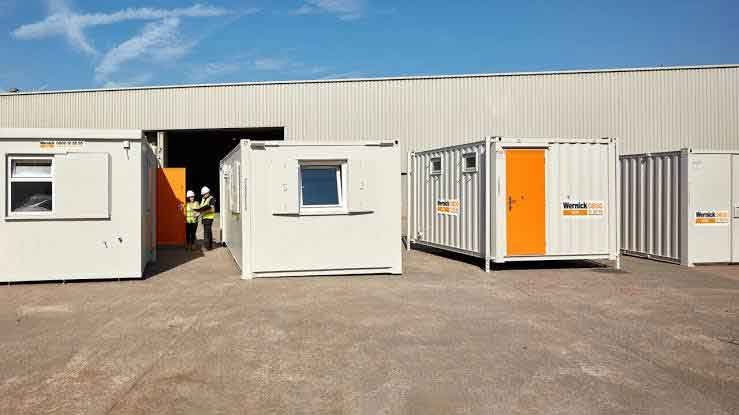
When a business needs additional office space, site accommodation, security facilities, storage, staff facilities, or temporary workspace, a portacabin can provide a practical alternative to conventional construction. However, one important decision comes first: should you invest in a refurbished portacabin or buy a new portacabin?
The answer is not simply about choosing the cheaper option.
A refurbished portacabin can offer lower upfront costs, faster availability, and the environmental benefit of extending the life of an existing structure. A new portacabin, on the other hand, can provide greater design flexibility, unused materials and systems, and a specification tailored to the exact requirements of the project.
The right choice depends on your budget, required timeline, intended use, customization needs, expected lifespan, site conditions, and the actual condition and refurbishment scope of the available unit.
This guide compares refurbished and new portacabins to help you make a more informed buying decision.
What Is a Refurbished Portacabin?
A refurbished portacabin is a previously used portable or modular unit that has undergone repair, upgrading, or renovation before being offered for sale or reuse.
The level of refurbishment can vary significantly between suppliers. A proper refurbishment may involve work on the structure, external panels, insulation, flooring, doors, windows, electrical systems, plumbing, interior finishes, and other components.
This distinction is important because a refurbished cabin is not necessarily the same as a basic used cabin with cosmetic improvements. Before purchasing, buyers should ask exactly what work has been completed and which components have been inspected, repaired, replaced, or tested.
Established modular-building suppliers describe refurbishment as a process that can include substantial redesign, new materials, structural upgrades, and performance improvements. However, the exact standard depends on the supplier and the condition of the original unit.
What Is a New Portacabin?
A new portacabin is manufactured as a completely new unit.
Depending on the supplier, buyers may be able to specify:
- Dimensions and layout
- Number of rooms
- Doors and windows
- Wall and roof insulation
- Flooring
- Electrical installation
- Plumbing and sanitary facilities
- Air-conditioning requirements
- Interior finishes
- Exterior appearance
- Security features
The biggest advantage of buying new is control. The cabin can be designed around the intended application rather than adapting an existing structure to fit the requirement.
For projects requiring a highly specific layout, modern finishes, particular technical features, or long-term use, a new portacabin may therefore be the more suitable option.
Refurbished Portacabin vs New Portacabin: A Quick Comparison
| Factor | Refurbished Portacabin | New Portacabin |
|---|---|---|
| Initial cost | Usually lower | Usually higher |
| Availability | Often faster if suitable stock exists | Depends on manufacturing schedule |
| Customization | Possible but may be limited by the existing structure | High level of customization |
| Condition | Depends on age and refurbishment quality | Completely new |
| Sustainability | Reuses an existing structure | Requires new materials and manufacturing |
| Long-term planning | Suitable when properly refurbished and maintained | Strong option for long-term requirements |
| Inspection needs | High | Lower, but specifications should still be verified |
| Appearance | Can be significantly improved through refurbishment | Brand-new finish |
| Technical specification | May require upgrades to meet project needs | Can be specified from the beginning |
The comparison shows why there is no universal winner. The best choice depends on what matters most to your project.
1. Initial Cost and Overall Budget
For many buyers, cost is the first consideration.
A refurbished portacabin can reduce the initial investment because the basic structure already exists. Rather than manufacturing an entirely new unit, the supplier can restore and upgrade an existing cabin.
This can make refurbished options particularly attractive for:
- Construction site offices
- Temporary project facilities
- Security cabins
- Storage units
- Staff accommodation
- Short- to medium-term workspace
- Businesses with limited capital budgets
However, buyers should not compare only the advertised purchase price.
A low-priced cabin may require additional spending on:
- Structural repairs
- Rust treatment
- Waterproofing
- New insulation
- Electrical upgrades
- Plumbing repairs
- Air-conditioning replacement
- Flooring
- Doors and windows
- Transportation
- Installation
The real comparison should therefore be based on the total installed cost, not simply the initial price.
Industry guidance on comparing new, used, and refurbished modular buildings similarly emphasizes that the condition of a pre-owned unit and the work required before use can significantly affect its overall value.
When Refurbished May Offer Better Value
A refurbished portacabin may be the better financial choice when:
- Your budget is limited.
- A suitable unit is already available.
- The required layout is relatively simple.
- The building is not intended to be highly customized.
- The refurbishment work is clearly defined.
- The cabin passes a proper structural and systems inspection.
When New May Offer Better Value
A new portacabin may provide better long-term value when:
- You expect to use it for many years.
- You require a specific layout.
- The cabin needs specialized systems or finishes.
- You want to minimize early maintenance uncertainty.
- The cost of upgrading a used unit approaches the price of a new one.
2. Availability and Project Timeline
Project deadlines can strongly influence the decision.
One advantage of refurbished modular buildings is that the primary structure already exists. If a suitable unit is available in stock, the time required may be shorter than designing and manufacturing a completely new building.
For example, Portakabin states that its refurbished pre-owned buildings can be delivered more quickly than traditional construction, although actual lead times depend on available stock, fit-out requirements, transportation, and project conditions.
This can make a refurbished portacabin a practical option for:
- Urgent site requirements
- Temporary offices
- Expansion projects
- Replacement facilities
- Project accommodation
- Emergency workspace requirements
A new portacabin may require more time because the supplier may need to complete design, engineering, manufacturing, finishing, and delivery.
However, if no available refurbished unit matches your requirements, modifying an existing cabin can also take time. Therefore, refurbished does not automatically mean immediate delivery.
Always ask the supplier for a confirmed delivery and installation schedule.
3. Customization and Layout Flexibility
Customization is one of the biggest differences between a refurbished and new portacabin.
New Portacabin
A new unit can usually be designed around your specific requirements.
You may be able to choose:
- Cabin dimensions
- Internal room arrangement
- Door locations
- Window sizes
- Office layout
- Toilet and shower facilities
- Kitchen areas
- Electrical outlets
- Lighting
- Air conditioning
- Insulation
- Interior finishes
This makes new portacabins particularly suitable for businesses that require a purpose-built facility.
Refurbished Portacabin
A refurbished unit can also be modified, but the existing frame and dimensions may limit how much the design can be changed.
The level of flexibility depends on:
- The original structure
- Structural design
- Condition of the frame
- Existing openings
- Budget
- Required modifications
Industry suppliers generally identify customization as one of the main advantages of buying new, while refurbished units offer more limited—but still useful—modification possibilities.
If your project requires a highly specific design, starting with a new portacabin may be simpler and more economical than heavily modifying an existing unit.
4. Condition and Quality Assurance
This is one of the most important considerations when buying a refurbished portacabin.
A new cabin begins with unused materials and systems. A refurbished unit has a previous history, so its value depends heavily on:
- Age
- Previous use
- Structural condition
- Exposure to weather
- Corrosion
- Water damage
- Maintenance history
- Quality of refurbishment
Before purchasing, ask the supplier for details about the refurbishment process.
Important questions include:
- Has the frame been inspected?
- Has corrosion been treated?
- Have damaged panels been repaired or replaced?
- Has the roof been checked for leaks?
- What insulation has been installed?
- Has the electrical system been inspected or upgraded?
- Have plumbing systems been tested?
- Is the air-conditioning system included?
- What components are new?
- What components remain from the original cabin?
- Is any warranty provided?
Reputable suppliers may provide documented refurbishment standards and warranty coverage. However, buyers should not assume that every refurbished unit receives the same level of work.
A thorough inspection is particularly important before buying a cabin that has been exposed to demanding site conditions.
5. Sustainability and Environmental Impact
A refurbished portacabin can be an attractive option for businesses seeking to reduce material consumption and extend the useful life of an existing structure.
Instead of disposing of the original cabin and manufacturing an entirely new replacement, refurbishment can keep the existing frame and other usable components in service.
Suppliers in the modular-building sector commonly identify reuse and refurbishment as part of a more circular approach to construction because they can reduce demand for new raw materials and prevent usable structures from becoming waste.
This can make a refurbished portacabin a strong choice when sustainability is an important part of the purchasing decision.
However, environmental performance should not be assumed automatically.
A poorly insulated older unit that consumes excessive energy may require upgrades before it becomes an efficient long-term solution.
For this reason, ask about:
- Wall and roof insulation
- Doors and windows
- Air leakage
- Air-conditioning efficiency
- Electrical equipment
- Lighting
- Condition of the building envelope
A properly refurbished cabin should be evaluated for both resource reuse and future operating performance.
6. Expected Lifespan and Long-Term Use
A common concern is whether a refurbished portacabin can provide reliable long-term service.
The answer depends on the original construction quality, structural condition, refurbishment work, operating environment, and maintenance.
A professionally refurbished structure can continue to provide useful service for many years. Modular-building suppliers note that properly designed, maintained, and refurbished modular buildings can have long service lives and can be repurposed over time.
However, a new portacabin gives the buyer a predictable starting point because the structure and installed systems are new.
For long-term applications, consider:
- Structural condition
- Future maintenance costs
- Corrosion protection
- Insulation quality
- Roof condition
- Electrical system condition
- HVAC equipment
- Availability of replacement parts
- Warranty coverage
If you intend to use the cabin as a long-term office or customer-facing facility, investing in a new unit may provide greater certainty.
If the requirement is temporary or the refurbished unit has been comprehensively upgraded, refurbishment may provide excellent value.
7. Maintenance Requirements
A new portacabin will generally have fewer age-related maintenance concerns at the beginning of its service life.
A refurbished unit may also perform reliably, but maintenance requirements depend on the quality of the refurbishment and the condition of components that were retained.
Before buying, determine:
- Which components are covered by warranty
- Whether HVAC equipment is new or existing
- The condition of electrical systems
- The condition of the roof
- Whether waterproofing has been renewed
- The condition of flooring and wall panels
- Recommended maintenance intervals
The cheapest purchase price can become less attractive if frequent repairs are required after installation.
Therefore, compare expected ownership costs, including maintenance, repairs, energy use, and potential upgrades.
8. Compliance and Project Requirements
Building requirements vary depending on the country, location, intended use, and duration of installation.
For example, official UK building guidance notes that existing modular or portable buildings placed at a new site can be treated as new construction for regulatory purposes, and additional considerations can apply when a building is planned to remain at one location for an extended period.
The exact rules in your location may differ, so buyers should verify the applicable local requirements before purchasing.
Depending on the project, requirements may involve:
- Structural safety
- Fire performance
- Electrical safety
- Plumbing
- Energy efficiency
- Thermal insulation
- Accessibility
- Site approvals
- Planning permissions
A new portacabin can be specified around known requirements from the beginning.
A refurbished portacabin may need upgrades before installation, depending on its original specification and intended new use.
Always confirm compliance requirements with the relevant local authorities and qualified professionals rather than assuming that a previously used cabin will automatically meet the requirements of a new site or application.
9. Appearance and Business Image
Appearance can also influence the decision.
For a basic construction site office, the visual difference between a professionally refurbished and new cabin may not be important.
However, for:
- Customer-facing offices
- Sales centres
- Educational facilities
- Healthcare applications
- Premium accommodation
- Corporate facilities
the appearance, finishes, branding, and interior design may carry greater importance.
A refurbished portacabin can receive new paint, panels, flooring, windows, doors, and interior finishes. However, a new cabin offers complete control over the appearance from the beginning.
If branding and presentation are critical, compare the cost of upgrading a refurbished unit against purchasing a new one designed to your specifications.
How to Choose Between a Refurbished and New Portacabin
The following questions can help simplify the decision.
Choose a Refurbished Portacabin If:
A refurbished unit may be the right choice when you:
- Want to reduce upfront costs
- Need a practical space quickly
- Have a standard layout requirement
- Value reuse and sustainability
- Find a unit in good structural condition
- Can verify the refurbishment work
- Do not require complete design freedom
Choose a New Portacabin If:
A new unit may be the better choice when you:
- Need a fully customized layout
- Require specific technical features
- Plan long-term use
- Want completely new materials and systems
- Need a particular appearance or finish
- Want greater certainty regarding the starting condition
- Require specifications to be incorporated from the design stage
Questions to Ask Before Buying a Refurbished Portacabin
Before finalizing your purchase, ask the supplier:
- What does the refurbishment include?
- Has the frame been structurally inspected?
- Has corrosion been treated?
- What parts have been replaced?
- Is the roof waterproof?
- What insulation is installed?
- Has the electrical system been inspected and tested?
- Are plumbing and sanitary systems included?
- Is air conditioning included?
- What warranty is provided?
- What is the total delivered and installed price?
- Are transportation and installation included?
- How long will delivery take?
- Can the cabin be modified for my requirements?
- What maintenance will be required?
These questions can help you distinguish a genuinely refurbished portacabin from a basic used unit that has received only cosmetic work.
Final Verdict: Refurbished Portacabin or New Portacabin?
There is no single answer for every project.
A refurbished portacabin can be the smarter choice when your priorities are cost savings, faster availability, and extending the useful life of an existing structure. However, the quality of the refurbishment must be carefully assessed. The condition of the frame, roof, insulation, electrical systems, plumbing, and HVAC equipment can significantly affect the cabin’s real value.
A new portacabin is generally the stronger option when customization, specific technical requirements, brand-new materials, long-term planning, and predictable starting condition are the highest priorities.
The most important step is to compare the total value of both options.
Do not choose a refurbished portacabin simply because it has the lowest purchase price, and do not automatically choose a new one if a properly refurbished unit can meet your operational requirements at a lower overall cost.
Before making a decision, compare the specifications, condition, refurbishment scope, warranty, delivery timeline, installation requirements, expected maintenance, and total cost of ownership. By doing so, you can choose the portacabin solution that best fits your project, budget, and long-term business needs.