
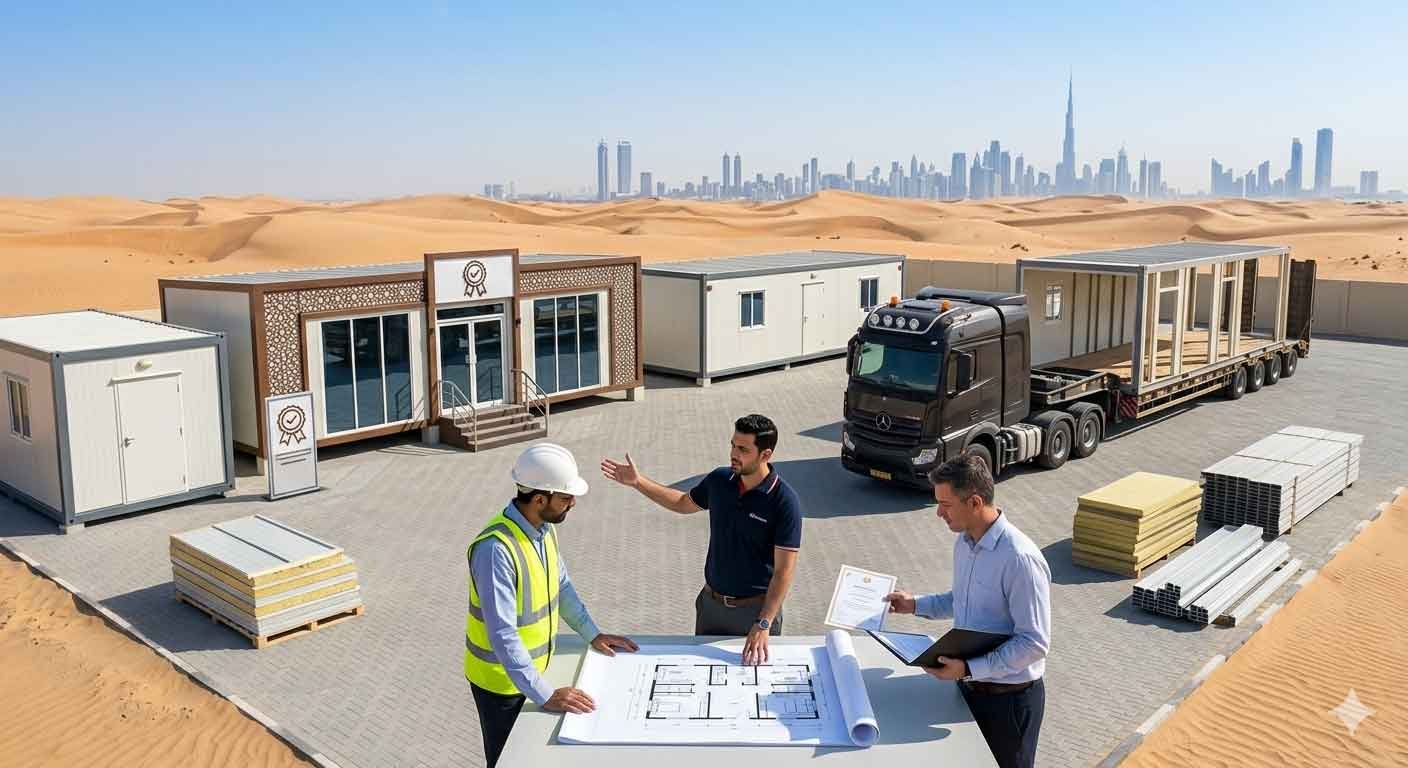
Businesses in the UAE often need additional space without the time and complexity associated with conventional construction. Site offices, security rooms, staff facilities, meeting rooms, accommodation, storage areas, and temporary project offices are some of the situations where prefabricated or portable buildings can be useful.
A portacabin in the UAE can provide a practical alternative when a business needs usable space within a limited timeframe. However, choosing the right unit is not simply a matter of selecting the cheapest cabin or the largest available size. The intended use, location, construction quality, insulation, electrical systems, fire safety, access, and local approval requirements all need to be considered.
Dubai Municipality’s building framework is designed to establish minimum requirements covering areas such as health, safety, building design, and sustainable development. Meanwhile, the UAE Government explains that local municipalities oversee building and construction safety and implement building and fire-protection requirements.
What Is a Portacabin?
A portacabin is a prefabricated building manufactured or assembled using modular construction methods and designed to provide usable enclosed space. Depending on its design, it can be configured as an office, security room, classroom, accommodation unit, welfare facility, meeting room, storage space, or other temporary or semi-permanent facility.
Portacabins are particularly useful for businesses that need additional space at construction sites, industrial facilities, commercial properties, events, or developing projects.
The exact requirements depend on how and where the unit will be used. A basic security cabin, for example, will have very different requirements from a multi-room office or staff accommodation facility.
Why Choosing the Right Portacabin Matters
The wrong portacabin can create problems that are not obvious when comparing prices. A unit may look suitable but lack sufficient insulation, electrical capacity, ventilation, fire-safety provisions, or space for the intended number of occupants.
The UAE’s climate also makes thermal performance an important consideration. A poorly insulated unit can place additional demand on its air-conditioning system and make the internal environment uncomfortable.
There are also regulatory considerations. UAE building safety is overseen by the relevant local authorities, meaning requirements can vary depending on the emirate and the type of installation.
For this reason, businesses should evaluate a portacabin as a complete facility rather than simply as a prefabricated box.
1. Start With the Purpose of the Portacabin
The first question should be: What will the portacabin be used for?
Different applications require different designs.
For example:
Site office: Workstations, lighting, electrical outlets, air conditioning, and communication facilities may be required.
Security cabin: Visibility, windows, lighting, electrical connections, and a suitable entrance may be priorities.
Meeting room: More internal space, comfortable temperature control, lighting, and acoustic considerations may matter.
Staff facility: Toilets, welfare facilities, ventilation, and appropriate occupancy provisions may be necessary.
Accommodation: The requirements are considerably different and may involve additional planning, sanitary, fire, and safety considerations.
Storage: Floor loading, ventilation, access, and security may be more important than an office-style interior.
Clearly defining the purpose before contacting suppliers makes it easier to specify the correct design.
2. Choose the Right Size and Layout
Size should be based on how the space will actually be used rather than simply selecting the biggest cabin available.
Consider:
Number of people using the space
Furniture and equipment
Required workstations
Meeting areas
Storage requirements
Internal partitions
Toilets or welfare facilities
Doors and emergency exits
Space available on the site
For a small security post, a compact cabin may be sufficient. A construction company requiring offices for project managers, engineers, and administrative staff may need several connected units or a larger modular arrangement.
Dubai Municipality specifications for certain prefabricated portacabin-type buildings demonstrate that requirements can include the unit itself as well as foundations, electrical and mechanical works, sanitary connections, air conditioning, doors, windows, and fire-fighting provisions.
3. Consider the UAE Climate and Insulation
The UAE’s hot climate makes insulation one of the most important features to examine.
Ask the supplier about:
Wall insulation
Roof insulation
Floor insulation
Doors and windows
Sealing around openings
Air-conditioning capacity
Glazing specifications
Heat transfer performance
Good insulation can help reduce heat entering the cabin and support more consistent indoor temperatures.
Dubai Municipality publishes requirements and technical resources related to building insulation and thermal performance, while its building code addresses minimum requirements for building design and environmental considerations.
A business should therefore avoid choosing a portacabin solely on appearance. The materials used inside the walls, roof, and floor can have a major effect on comfort and operating requirements.
4. Check the Construction Materials
The quality of the structural frame, wall panels, flooring, roof, doors, and windows affects the durability of the unit.
When comparing suppliers, ask for information about:
Structural frame material
Panel construction
Insulation material and thickness
Flooring
Roof construction
Door specifications
Window specifications
Corrosion protection
Surface finishes
For projects requiring durable prefabricated buildings, structural specifications should be documented rather than relying on a general statement that the cabin is “heavy duty.”
Dubai Municipality’s specifications for particular prefabricated portacabin applications include defined structural steel requirements and a stated minimum design life for the complete unit. These specifications illustrate why businesses should request technical documentation for the particular cabin they are considering.
5. Do Not Overlook Fire Safety
Fire safety should be considered before a portacabin is delivered to a site.
Depending on the use and location, requirements can involve:
Fire extinguishers
Fire detection
Emergency exits
Exit signage
Emergency lighting
Safe access and egress
Fire-resistant or compliant materials
Appropriate spacing between units
Emergency procedures
The UAE Government states that local municipalities oversee building and construction safety, including fire protection requirements.
Abu Dhabi’s temporary-structures guidance, for example, states that portable buildings must be fit for purpose and comply with applicable fire and electrical safety regulations. It also addresses safe access and egress, fire detection and firefighting equipment, spacing between portable buildings, and electrical installations.
Requirements should therefore be checked with the relevant authority for the specific emirate and project rather than assuming that every portacabin follows identical rules.
6. Examine the Electrical System
A portacabin may require considerably more electrical capacity than its appearance suggests.
Before selecting a unit, determine the expected load from:
Air conditioners
Lighting
Computers
Printers
Refrigerators
Water heaters
Office equipment
Security equipment
Specialized machinery
The supplier should be able to explain the electrical distribution arrangement and the capacity provided.
For portable buildings in Abu Dhabi, the relevant occupational safety guidance requires electrical installations to be completed by a competent electrician and specifies periodic testing of distribution boards, cables, sockets, and other fixed electrical installations.
This is another reason to treat electrical specifications as a safety issue rather than simply an optional feature.
7. Look at Doors, Windows and Ventilation
Natural light and ventilation can significantly affect the usability of a portacabin.
Consider whether the unit provides:
Adequate windows
Appropriate glazing
Secure doors
Emergency exits where required
Ventilation
Air-conditioning
Suitable window shading
For an office, excessive heat gain through windows can increase the cooling requirement. For a security cabin, windows may be particularly important because visibility can be a core part of the unit’s function.
The design should therefore reflect the purpose of the building rather than using the same configuration for every application.
8. Consider the Foundation and Site Conditions
A portacabin still needs an appropriate location and base.
The site should be assessed for:
Ground condition
Levelness
Drainage
Access for delivery vehicles
Crane or lifting requirements
Utility connections
Emergency access
Space between units
Future removal or relocation
Abu Dhabi’s temporary-structures guidance specifies a level concrete base for portable buildings and addresses safe positioning, access, and lifting requirements.
The supplier should explain what type of foundation or support arrangement is required for the particular unit rather than assuming that it can simply be placed anywhere on the site.
9. Think About Transportation and Installation
One of the advantages of prefabricated buildings is their ability to be transported and installed at a project site. But transportation itself requires planning.
Before ordering, check:
Delivery route
Site entrance width
Vehicle access
Lifting equipment
Installation area
Overhead restrictions
Utility connection points
Installation schedule
If multiple cabins are being installed, their positioning and connections should be planned as part of the overall site layout.
For portable buildings, lifting should also follow appropriate safety procedures and manufacturer requirements. Abu Dhabi’s guidance specifically addresses the safe lifting of portable buildings and the inspection and certification of lifting points.
10. Decide Between a Single Unit and Modular Configuration
A business does not necessarily have to choose one large cabin.
Multiple portacabins can sometimes be arranged to create:
Larger offices
Meeting areas
Staff facilities
Multi-room accommodation
Reception areas
Project administration blocks
This can provide flexibility when the business expects its space requirements to change.
However, connecting multiple units also introduces additional considerations involving walkways, fire safety, electrical systems, utilities, access, and emergency planning. Abu Dhabi’s temporary-structures guidance, for example, includes additional provisions where multiple portable buildings are used.
11. Compare New and Used Portacabins Carefully
Businesses looking to reduce initial expenditure may consider used portacabins.
A used unit can be suitable when its condition and specifications meet the project’s requirements. But price should not be the only consideration.
Inspect:
Structural condition
Roof
Floor
Wall panels
Insulation
Doors and windows
Electrical system
Air conditioning
Water and sanitary connections
Signs of corrosion
Previous modifications
A low purchase price can become less attractive if extensive repairs or modifications are needed before the cabin can be used.
12. Check Whether You Need to Buy or Rent
The right choice also depends on how long the business needs the facility.
Renting may make sense when:
The project is temporary
The requirement is seasonal
A construction site needs offices
Additional space is needed temporarily
A permanent building is being renovated
The business wants flexibility
Buying may make more sense when:
The unit will be used for an extended period
The business expects continued demand
The unit requires extensive customization
Long-term ownership provides better overall value
The best option should be determined by comparing the complete cost over the expected period, including transportation, installation, modifications, maintenance, and removal.
13. Verify Local Approvals and Requirements
One of the most important steps is checking the requirements that apply to the specific location.
There is no universal assumption that a portacabin can simply be delivered and occupied without approval. UAE building requirements are administered through the relevant local authorities, and requirements can depend on the emirate, site, building use, and project circumstances.
Dubai’s regulations also recognize temporary buildings and uses in specific circumstances. For example, Dubai regulations identify temporary offices and security rooms on construction projects as temporary uses subject to applicable requirements.
Businesses should therefore confirm:
- Whether approval or a permit is required
- Which authority is responsible
- Whether the intended use is permitted at the site
- Fire and life-safety requirements
- Structural requirements
- Utility requirements
- Occupancy requirements
- Any requirements for removal after the project
Do not rely solely on a supplier’s verbal assurance. Request the relevant documentation and confirm requirements with the appropriate authority.
14. Choose a Supplier Based on More Than Price
A reliable supplier should be able to provide clear information about the unit.
Ask for:
Technical specifications
Dimensions
Floor plan
Material details
Insulation specifications
Electrical details
HVAC information
Fire-safety provisions
DeliInstallation scope Warranty
Maintenance support
Modification options
A supplier who can clearly explain what is included in the quoted price makes it easier to compare offers fairly.
A Simple Portacabin Selection Checklist
Before making a decision, businesses can use the following checklist:
| Factor | What to Check |
|---|---|
| Purpose | Office, security, accommodation, storage, welfare, etc. |
| Size | Number of occupants and required equipment |
| Layout | Open plan, partitioned rooms, toilets, meeting space |
| Structure | Frame, panels, floor and roof construction |
| Insulation | Wall, roof and floor thermal performance |
| HVAC | Air-conditioning type and capacity |
| Electrical | Load capacity, sockets, lighting and distribution |
| Safety | Fire protection, exits, alarms and signage |
| Site | Base, drainage, access and installation area |
| Transport | Delivery vehicle and lifting requirements |
| Compliance | Local permits and authority requirements |
| Condition | New or used, structural and internal condition |
| Cost | Purchase/rental plus delivery, installation and modifications |
| Support | Warranty, maintenance and after-sales service |
Final Thoughts
Choosing the right portacabin in UAE requires more than comparing dimensions and prices. The best unit is one that matches the intended use, site conditions, climate, occupancy, safety requirements, and expected period of use.
Businesses should pay particular attention to insulation, structural quality, electrical systems, air conditioning, fire safety, layout, foundations, transportation, and local approvals. These factors can have a much greater impact on the long-term usefulness of the unit than its initial purchase or rental price.
Whether the requirement is a small security cabin, a construction-site office, a multi-room project facility, or a larger modular building, a detailed assessment before ordering can help avoid costly changes later.
Most importantly, businesses should verify the requirements applicable to their particular emirate and project. UAE building and safety requirements are regulated locally, and the appropriate authority should be consulted before installation and occupation.