
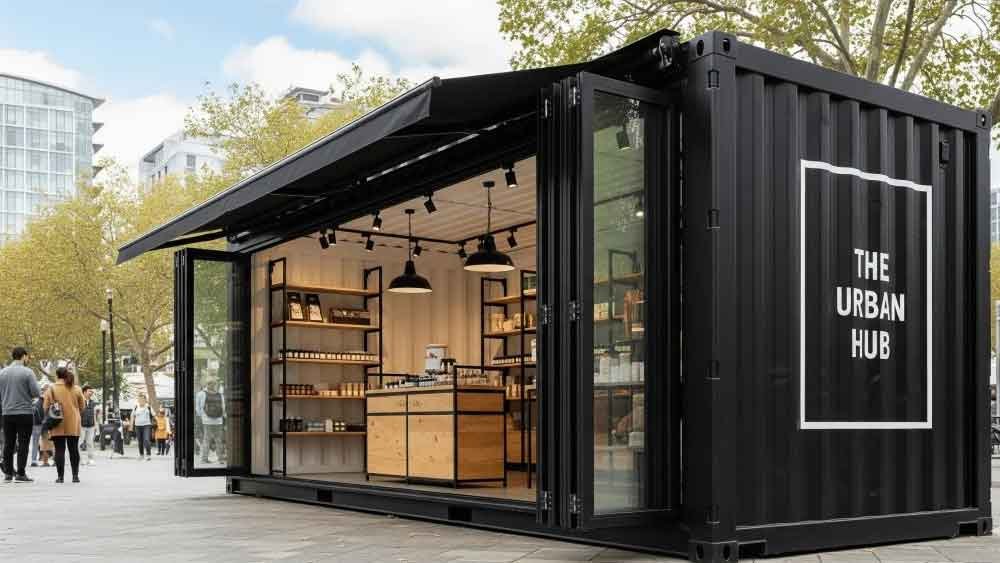
Buying a portacabin in Dubai can be a practical way to create additional office, security, accommodation, storage, or project space without following the same construction process as a conventional building. However, choosing a unit should involve more than comparing photographs and asking for the lowest quotation.
A portacabin is still a structure that may be subject to planning, building, safety, and site-specific requirements. Dubai Municipality states that its building-permit procedures cover different categories of buildings and include technical inspections and requirements relating to approved standards and specifications. Dubai’s Building Code also applies to building designs for which permits are issued across the emirate.
That means a cheap cabin can become an expensive purchase if its specifications, condition, intended use, or site approvals are overlooked.
Here are the most common mistakes buyers should avoid when purchasing a portacabin in Dubai.
1. Choosing the Cheapest Portacabin Without Comparing Specifications
One of the biggest mistakes is treating portacabins as identical products.
Two cabins may have the same external dimensions but differ substantially in:
Structural frame
Wall and roof panels
Insulation
Flooring
Doors and windows
Electrical installation
Plumbing
Air conditioning
Internal partitions
Fire-safety provisions
Overall condition
Current UAE suppliers, for example, advertise cabins using insulated sandwich panels and steel framing, but specifications vary between products. One UAE supplier’s published technical specification identifies a steel skid-mounted base and insulated polyurethane sandwich panels, illustrating why buyers need to examine the actual construction specification rather than relying on the word “prefabricated.”
Better approach: Ask every supplier to provide a written specification sheet and compare equivalent specifications before comparing prices.
2. Assuming Every Portacabin Can Be Installed Anywhere
Buying the physical cabin is only one part of the process.
Where and how the unit will be placed can affect the approvals required. Dubai’s construction regulations state that construction works involving a permanent or temporary change to land or real property generally require the relevant permit. The regulations also specifically recognise temporary construction works such as temporary site offices.
Dubai Municipality also maintains formal building-permit procedures, while the Dubai Development Authority lists temporary construction permits and other construction-related approvals.
So before buying, determine:
Who controls the plot?
Is it within Dubai Municipality jurisdiction?
Is it in a free zone or special development area?
Is a master developer involved?
What will the cabin be used for?
Is it temporary or intended for longer-term use?
Are drawings, NOCs, or permits required?
Do not assume that because a cabin is portable, no approval is necessary.
3. Ignoring the Intended Use
A security cabin, site office, worker accommodation unit, storage cabin, and fully fitted office do not have the same requirements.
For example, a simple guard room may need little more than suitable structure, windows, lighting, electrical connections, ventilation, and air conditioning. An occupied accommodation or office facility may involve substantially more requirements.
Dubai’s land-use regulations specifically identify certain temporary uses, including temporary offices at construction projects and temporary security rooms, subject to the applicable requirements.
Before requesting quotations, clearly tell the supplier what the cabin will be used for.
This helps prevent buying a basic unit and discovering later that it does not meet the requirements of the intended application.
4. Buying a Used Cabin Without a Physical Inspection
Used portacabins can be attractive because the purchase price may be lower than that of a new unit. But condition can vary considerably.
A photograph rarely tells you everything about a used cabin.
Inspect the:
Steel frame
Roof
Floor
Wall panels
Ceiling
Door frames
Windows
Locks and hinges
Electrical distribution board
Wiring
Air-conditioning units
Plumbing
Bathroom fittings
Signs of water leakage
Corrosion
Previous repairs
Previous modifications
Pay particular attention to the floor and roof. Water ingress can create problems that are not obvious from exterior photographs.
Dubai’s 2026 building-quality legislation places emphasis on structural condition, exterior cladding, electrical and mechanical installations, doors and windows, and compliance with safety requirements when buildings are technically assessed.
While this law should not be interpreted as a universal used-portacabin inspection checklist, it demonstrates why structural and building-system condition should not be ignored.
5. Overlooking Insulation in Dubai’s Climate
Insulation is not simply an optional comfort feature in Dubai.
A poorly insulated cabin can transfer more heat through the roof and walls, increasing the workload placed on the air-conditioning system.
UAE portacabin suppliers commonly use insulated sandwich panels in their products. Published UAE specifications show that panel construction can include polyurethane insulation, with the exact thickness and thermal characteristics varying between products.
When comparing cabins, ask for the actual specification rather than accepting statements such as “fully insulated.”
Check:
Wall insulation type
Wall-panel thickness
Roof insulation
Floor construction
Door insulation
Window specification
Thermal-performance information, where available
The roof deserves particular attention because it receives significant solar exposure.
6. Forgetting About Fire and Life-Safety Requirements
Another serious mistake is purchasing a cabin first and considering fire safety later.
Dubai has a dedicated regulatory framework for fire and preventive safety. The Dubai Civil Defence legislation places obligations on owners and facilities concerning preventive safety requirements and maintenance of fire-prevention systems. It also requires approval regarding modifications that could affect preventive safety requirements.
Depending on the intended use and site, you may need to consider:
Fire-rated construction
Fire-resistant materials
Emergency exits
Fire extinguishers
Fire alarm systems
Emergency lighting
Electrical safety
Occupancy requirements
Civil Defence requirements
If a supplier claims that a cabin is “fire rated,” ask for the relevant documentation instead of relying on a verbal statement.
7. Assuming a Supplier’s Materials Are Automatically Approved
Material quality and regulatory compliance are different things.
Dubai Municipality operates product certification and conformity systems for various building materials and products. Its Dubai Central Laboratory Department provides certification and conformity services intended to demonstrate that products meet applicable standards and regulations.
Dubai Municipality also maintains lists of certified products, including building-related materials and other categories.
This does not mean every component of every portacabin needs the same certification. Instead, it means buyers should ask which approvals or conformity documentation apply to the particular product and application.
8. Failing to Check the Structural Specification
A portacabin may look solid from the outside while having a completely different structural specification from another unit.
Ask the supplier about:
Frame material
Steel sections
Structural calculations, where applicable
Corrosion protection
Floor structure
Roof construction
Connection details
Foundation or support requirements
Design loads
Engineering documentation
Dubai’s building requirements state that structural designs for buildings and structures must be prepared by appropriately qualified and licensed structural engineers, and that structures and materials must meet requirements relating to durability and safety against relevant loads.
For projects requiring formal engineering approval, technical documentation is therefore much more valuable than a simple product brochure.
9. Not Checking Delivery and Site Access
A portacabin can be perfectly suitable on paper and still create a logistical problem if it cannot reach the intended location.
Before purchasing, check:
Road access
Gate width
Gate height
Turning radius
Overhead obstructions
Delivery vehicle access
Crane requirements
Unloading area
Final positioning
Ground conditions
Ask whether transportation and unloading are included in the quotation.
A supplier’s advertised cabin price may cover the unit itself while delivery, crane unloading, foundations, installation, or connections are charged separately.
10. Comparing Prices Without Comparing the Complete Package
A low headline price does not necessarily mean a low total cost.
Your final expenditure may include:
Cabin purchase
VAT
Transportation
Crane or unloading
Foundations or supports
Installation
Electrical connection
Plumbing
Air conditioning
Internal partitions
Furniture
Fire-safety equipment
Site modifications
Maintenance
This is why two quotations with apparently similar cabin prices can produce very different final totals.
Ask for an itemised quotation.
That makes it easier to identify what is included and what will be charged separately.
11. Buying the Wrong Size
Another common mistake is choosing a cabin based only on the amount of floor area available.
Think about how the space will actually be used.
For an office, consider:
Number of employees
Desks
Meeting space
Storage
Circulation
Electrical outlets
Air-conditioning requirements
For accommodation, consider:
Occupancy
Beds
Storage
Toilets
Showers
Ventilation
Applicable occupancy requirements
For a security cabin, visibility and window positioning may be more important than having a large internal area.
UAE suppliers currently advertise a wide range of dimensions, from small security units to larger modular configurations.
The right size is therefore determined by the intended use—not simply by what happens to be available in a supplier’s yard.
12. Forgetting About Air Conditioning
In Dubai, air conditioning is a major consideration for occupied portacabins.
Do not simply ask whether an AC unit is included. Check:
AC capacity
Number of units
Unit condition
High-ambient suitability
Electrical requirements
Outdoor-unit positioning
Maintenance history for used equipment
A cabin with good insulation but an unsuitable AC system can still provide poor comfort.
Likewise, installing an oversized or inefficient system without considering the actual cabin load is not necessarily a good solution.
13. Accepting Verbal Promises Instead of Written Documentation
A common purchasing mistake is relying on statements such as:
“The cabin is fire rated.”
“Delivery is included.”
“The cabin is fully insulated.”
“Everything is approved.”
“Installation is included.”
Instead, request these details in writing.
A proper quotation should clearly identify:
Cabin dimensions
Construction materials
Insulation specification
Electrical specification
Plumbing specification
AC specification
Included accessories
Delivery terms
Installation terms
Warranty
Payment terms
Expected delivery date
Applicable approvals or documentation
Written specifications make supplier comparisons much easier.
14. Not Checking Whether the Supplier Can Support Modifications
You may initially purchase a simple cabin and later need:
Extra doors
Additional windows
Partitions
Pantry
Toilet
Additional electrical points
Air conditioning
Flooring upgrades
Exterior modifications
But not every cabin is equally easy to modify.
Ask the supplier whether modifications are possible and whether they affect structural integrity, warranties, fire performance, or approvals.
Dubai Municipality currently provides a formal route for approval of new building systems, including structural, MEP and thermal aspects, illustrating that building-system changes should not automatically be treated as purely cosmetic modifications.
15. Ignoring the Difference Between Temporary and Permanent Requirements
“Temporary” does not automatically mean “free from regulations.”
Dubai’s rules distinguish temporary construction works and temporary uses, and specific permits may apply depending on the project and location.
If you are buying a cabin for a construction project, determine the permitted duration and conditions before purchasing.
This is particularly important when a cabin is intended to remain on a site for an extended period.
A Practical Portacabin Buying Checklist
Before making a purchase in Dubai, work through this checklist:
| Check | What to Verify |
|---|---|
| Purpose | Office, security, accommodation, storage, welfare, etc. |
| Size | Internal and external dimensions |
| Structure | Frame and structural specification |
| Insulation | Wall, roof and floor construction |
| Condition | Especially for used units |
| Electrical | Wiring, DB, sockets and lighting |
| AC | Capacity, condition and suitability |
| Plumbing | Pipes, drainage and sanitary fittings |
| Fire safety | Applicable fire and life-safety requirements |
| Documentation | Technical specifications and certificates |
| Delivery | Transport and unloading arrangements |
| Installation | Included or charged separately |
| Site | Access, positioning and ground conditions |
| Approvals | Applicable authority, NOCs and permits |
| Warranty | Coverage and duration |
| Final cost | All additional charges included |
How to Choose a Reliable Portacabin Supplier in Dubai
A reliable supplier should be willing to discuss the technical details rather than focusing only on price.
Look for a supplier that can:
Provide a detailed specification
Explain the construction method
Show the actual cabin where possible
Provide documentation for relevant materials
Explain delivery requirements
Assist with installation
Clearly identify exclusions
Explain warranty terms
Understand the requirements of your intended site
For larger or more technically demanding projects, ask whether the supplier can provide drawings and engineering documentation suitable for the relevant approval process.
Dubai Development Authority, for example, describes design approvals covering architectural, structural and MEP designs in accordance with applicable codes and regulations.
Final Thoughts
Buying a portacabin in Dubai can be a sensible solution for businesses, contractors and project operators that need functional space quickly. But the purchase should be treated as a technical and site-specific decision rather than a simple second-hand equipment transaction.
The biggest pitfalls are usually straightforward to avoid: do not buy based solely on price, inspect used cabins carefully, verify insulation and structural specifications, obtain written documentation, calculate the complete delivered and installed cost, and check the requirements that apply to your particular site and intended use.
Dubai’s current regulatory environment places clear emphasis on building safety, approved construction practices, permits and technical requirements.
The best portacabin is therefore not necessarily the cheapest one. It is the unit that matches your intended use, performs appropriately in Dubai’s environment, can be installed at your site, and meets the requirements applicable to the project.